A Moveable Moat
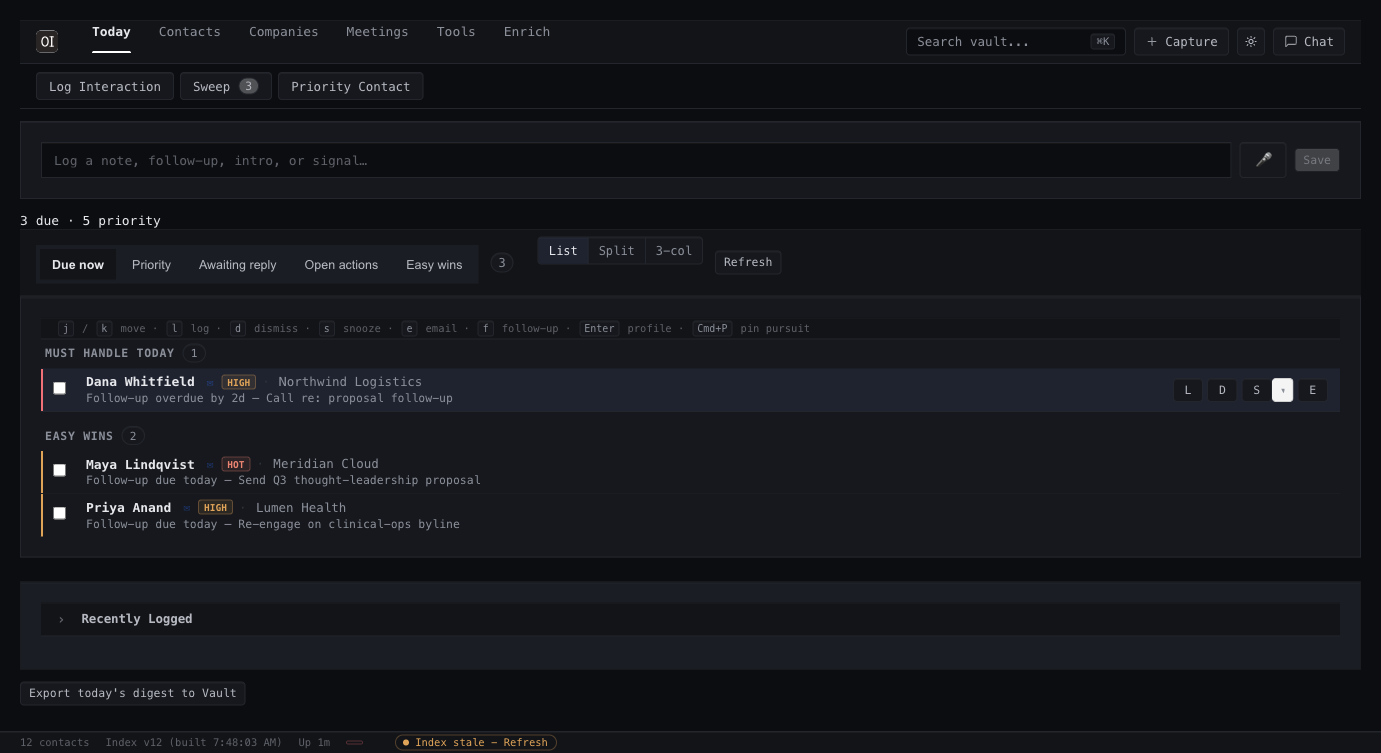
Last week I called a former colleague that I hadn't spoken to for a while. The call happened for one reason. A tool I built kept surfacing his name, a persistent chip in my to-follow-up list, until I finally picked up the phone. We talked for an hour. It likely wouldn't have happened if I hadn't built my own CRM, the first one that has actually worked for me.
I built it because every CRM I tried had a Goldilocks problem. Too much in one place, too little in another, never shaped like the work I actually do. All in the cloud, which always meant the data I spent time building wasn't really mine.
Thanks to pioneers like Noah Brier, I moved my notes, contacts, and various other ephemera to Obsidian and began building the tools to interface with these notes. To be able to sit down and bit-by-bit map out exactly how I want this tool to work and interface with me has been a revelation.
The contacts and connections I've made are the single greatest asset this business has, and the idea of handing all of it to a cloud-based third party, a company whose terms and roadmap and survival I don't control, sat wrong with me. I wanted to own my network outright, in files I keep on my own machine.
But I didn't stop there. I then built a workflow tool.
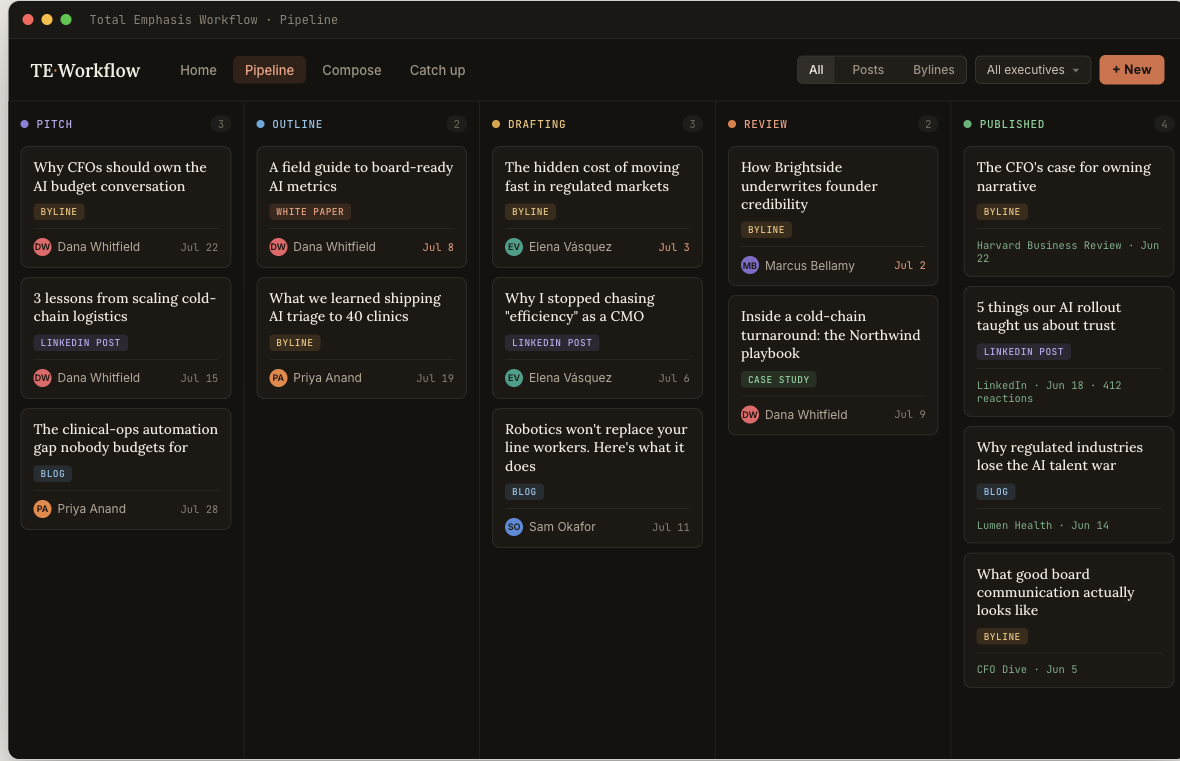
All names and companies in these screenshots are dummy data.
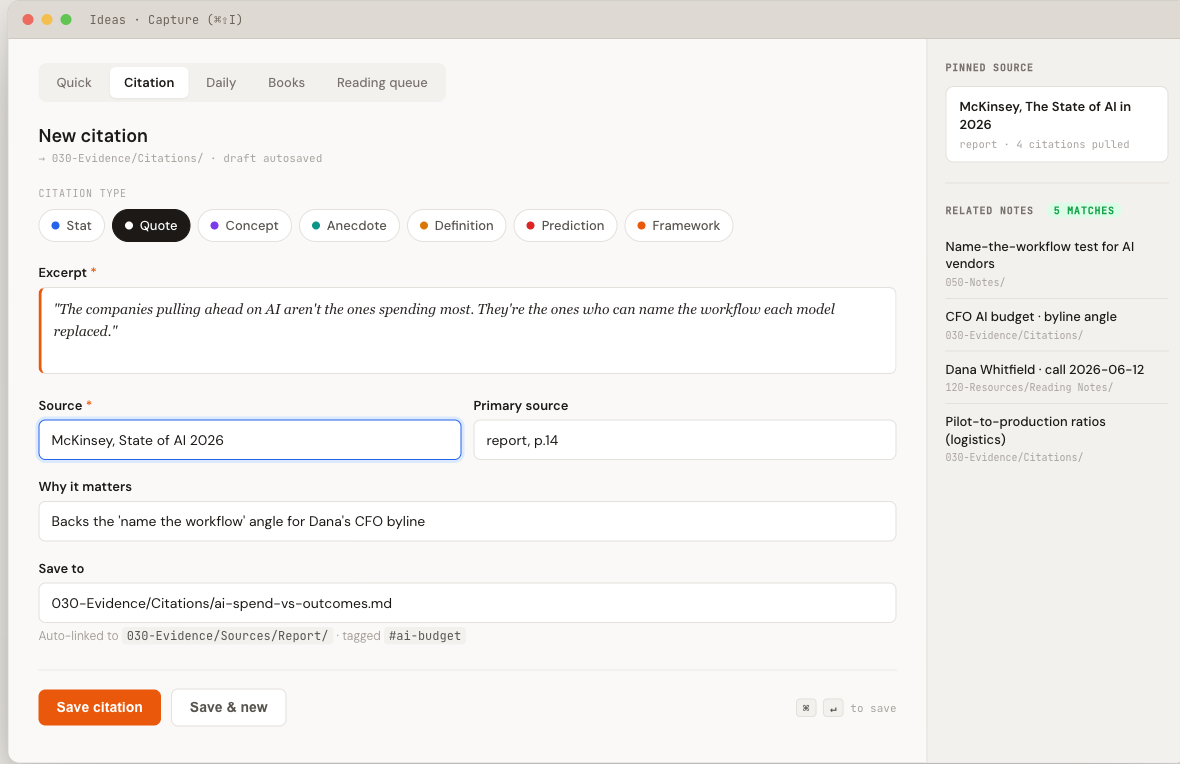
I built an Ideas app to quickly log moments of inspiration. I have the stats database I've always dreamt of.
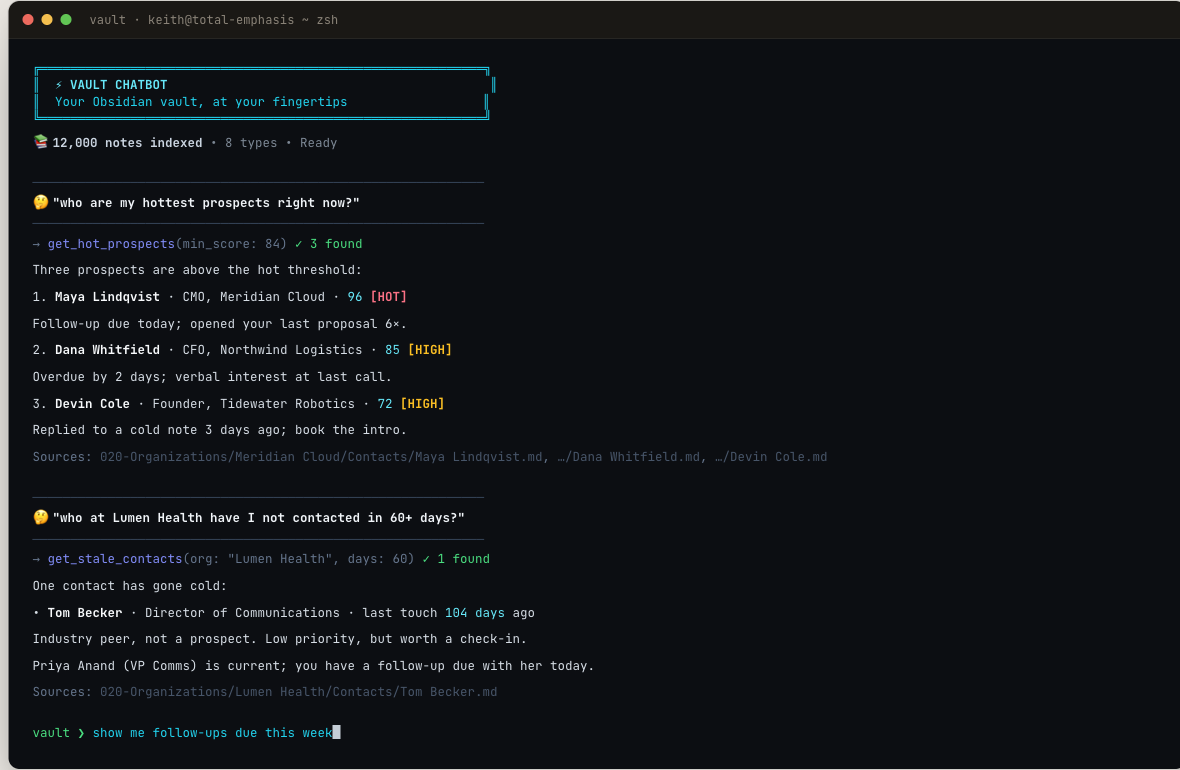
Now, I live in the terminal and these lightweight apps I've built. That part surprised me. I never expected to feel this at home typing to my own business in a chat window. I copy a messy block of text off a LinkedIn profile, someone's title, their last three roles, a line about where we met, and I paste the whole thing in. The system knows what to do with it. It files the person, scores the relationship, tells me when to follow up. Filling out small fields in a form feels like a chore now. Worse than a chore. It feels like doing the computer's job for it.
I am more efficient, and more effective at buckling down to what my livelihood is: the act of writing. Building it taught me something the tool itself never could.
Encoding a workflow in software forces you to stare at what you're doing, and you see all the roadblocks. Mine was follow-up. The CRM made it specific, a name on a list every morning, until I did something about it.
A pipeline so nothing owed to a client gets forgotten. A research engine that scores articles against what each client cares about, so a pitch starts from evidence. A chatbot that answers questions about the business in plain English, and runs inside Claude.
One Obsidian vault under all of it, mine, on my machine. Because I own every piece, they connect. I build something new and it plugs into what's already there. I feel for the first time that I can take on as much work as I want, which is not something I could ever say before. Projects I used to lose because one person looked too small for them are projects I can credibly bid on now.
None of this means the machine does the writing. I keep my muscle memory. I write the first draft myself. When I'm swamped I can trust the system to get an outline down. The whole job is the taste to know when what you're getting back is no good. It's all there for someone with enough experience to mold the clay into a sculpture.
So I've stopped believing in the single moat. Hemingway called Paris a moveable feast, something you carry wherever you go. This market demands a moveable moat. No one wall keeps you safe. What keeps you honest is velocity.
The only defensible position left is the ability to build the next thing faster than the last thing gets copied.
So I'm no longer just a ghostwriter. I'm a writer/builder. Big things, small things. It doesn't feel like work, because everywhere I go I see another idea and it's finally feasible to go make it within a day or two and suddenly my workflow improves another 10%.